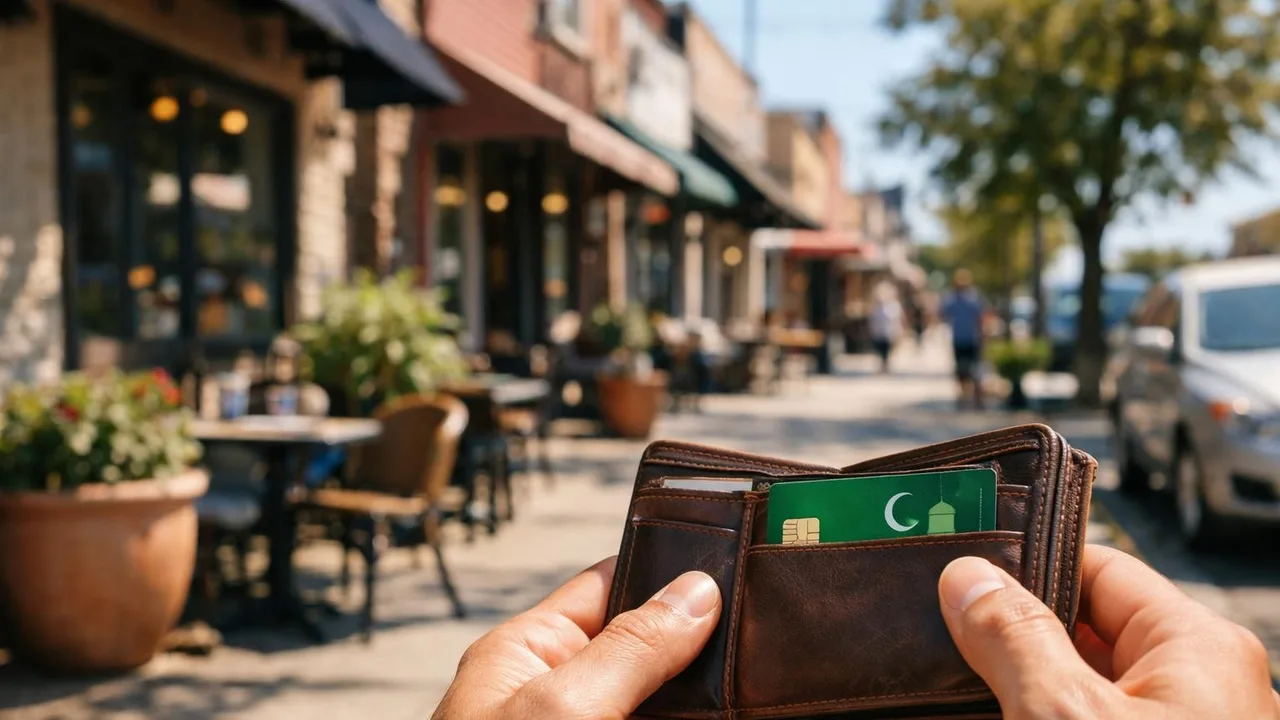
Bank of Whittier, N.A. is a nationally chartered, FDIC-insured bank headquartered in Whittier, California, with a second office in Richardson, Texas, that operates under what it calls riba-free (RF) banking. It is the only US bank regulated by the Office of the Comptroller of the Currency that runs its entire book, deposits and financing alike, on the LARIBA model developed by its founder Dr. Yahia Abdul-Rahman. According to FDIC data as of June 30, 2026, the bank held $152.6 million in total assets and $125.2 million in deposits. It offers checking, savings, certificates of deposit, home financing, auto financing and small business financing to customers in all 50 states through its internet banking platform. This review explains the model, lists the account terms the bank publishes, and compares it with the other US banks serving Muslim customers.
Ready to compare halal options?
What "riba-free" means at Bank of Whittier
The bank's own framing is unusual. It does not describe itself as an "Islamic bank" and the word Shariah appears sparingly on its site. Instead it describes a discipline it calls RF banking, built on three ideas that its materials repeat:
- Money is not a commodity to be rented out. Return is earned by investing in real assets or productive activity, not by charging for the use of cash.
- Every financing decision starts with a "mark-to-market" test. For a home, the bank gathers rental estimates for comparable properties and asks whether the implied return on the purchase price makes economic sense. If a house is overpriced relative to what it would rent for, the bank tells the customer so, even if the customer qualifies.
- Depositors share in what the bank earns from its financing book rather than receiving a promised rate.
The financing structure is a Declining Participation in Usufruct (DPU), sometimes called Diminishing Musharakah. The bank and the customer jointly own the right to use the asset. The customer buys out the bank's share over time while paying the bank a proportional share of the asset's market rent. The bank's materials are candid that, to comply with US banking law and to allow the customer to claim the mortgage interest deduction, the paperwork is a standard note and deed of trust with the implied rate expressed as an "interest rate." The economic substance, the bank argues, is a rent-based partnership that was priced from market rents rather than from a money-rental rate. Our LARIBA home financing review explains how the same model worked at the affiliated finance house.
That distinction between legal form and economic substance is the heart of every debate about Bank of Whittier. Scholars who accept the DPU model consider the contract halal because the pricing is rooted in the asset's rent and the risk is shared. Critics argue that if the note looks like a conventional mortgage and the payment schedule matches one, the label does not change the substance. We present both views and let you decide; what the bank does not do is pretend the question away.
Who owns the bank and how it is regulated
Bank of Whittier was established on December 20, 1982, according to the FDIC's BankFind record, and was later acquired by a group led by Dr. Abdul-Rahman, who also founded American Finance House LARIBA. The bank holds FDIC certificate 24211 and is supervised by the OCC as a national association, which means it files the same quarterly call reports and faces the same safety-and-soundness exams as any other national bank. Deposits are FDIC-insured to the standard $250,000 per depositor, per ownership category.
One development worth knowing: American Finance House LARIBA, the separate finance company that shared the bank's philosophy and founder, joined UIF Corporation on April 1, 2026, according to UIF's site. UIF is the faith-based subsidiary of University Bank in Michigan. Bank of Whittier itself continues to operate independently under its own charter; the merger affected the finance house, not the bank. If you were a LARIBA financing customer, your account moved to UIF; if you were a Bank of Whittier customer, nothing changed.
Deposit accounts: AMANA checking, RF savings and RF CDs
The bank's deposit menu, as published on bankofwhittier.com in October 2026, has four products:
| Account | Who it is for | Return | Key terms the bank lists |
|---|---|---|---|
| AMANA Checking | People who want no return at all | None | No monthly fee at the basic tier, no overdraft activation, Zelle, debit card, free online and mobile banking |
| RF Income-Generating Checking | Households that want checking plus a share of bank profits | Declared periodically based on the bank's RF portfolio income | Same services as AMANA with a profit share credited |
| RF Income-Generating Savings | Everyday savings | Declared periodically | Online and mobile access, no stated minimum on the page |
| RF Certificates of Deposit | Savers who can lock funds | Declared for 3-, 6- and 12-month terms | Terms of 3, 6 and 12 months; early withdrawal terms in the account agreement |
The bank does not publish a live rate table for its income-generating accounts on the public pages we fetched. It describes the return as a share of the income the bank generates from its RF financing portfolio, declared in advance for the period and paid at the end. In practice, former customers who have written to us say the figure is set to be competitive with local market rates, but we could not confirm a current number from the bank's pages, so ask the branch for the current declared rate before opening.
The AMANA account is interesting for a different reason. It is designed for people who want to hold deposits with no return whatsoever, which some Muslims prefer so that they never have to think about purification. The bank makes a point of not activating overdraft on any account, which removes the overdraft fee problem that we discuss in halal checking and savings. The bank also states that it does not offer a credit card and does not recommend that customers carry one.
Home financing: how a Bank of Whittier mortgage is priced
The bank finances owner-occupied homes and one- to four-unit investment properties. Its published process, which it calls the LARIBA model of RF home financing, has steps you will not see at a conventional lender:
- The customer finds a property and agrees a price with the seller.
- The bank obtains rental estimates for comparable properties. The bank's materials describe gathering several estimates from local real estate professionals and public data.
- The implied rate of return is calculated by dividing the net market rent by the purchase price. If that return is below the bank's threshold, the bank advises the customer that the property is overpriced and may decline, or may ask the customer to put more down.
- If the test passes, the bank and the customer enter a DPU agreement. The customer's monthly payment has two components: a repurchase of the bank's share, and the bank's proportional share of the rent.
- The agreement is documented on standard US mortgage paperwork so that the customer can claim the mortgage interest deduction and so the loan can be reported, serviced and, if needed, enforced under state law.
Terms the bank publishes: no application fee, in-house servicing (the bank states it does not sell its financings to Fannie Mae or Freddie Mac), and financing terms of up to 30 years. The bank does not publish a rate sheet for home financing, because the implied rate is derived from the rent analysis of each property. You can compare that process with the market-rate approach of other providers and read the contract mechanics at halal mortgage contract explained.
Auto financing: published terms
Unlike home financing, the auto program comes with specific rules the bank spells out:
- Minimum down payment of 20% for new vehicles and 30% for used vehicles.
- Maximum term of five years for new vehicles and three years for used.
- A processing fee of $390.
- The vehicle must be bought from a dealer in the customer's state of residence and must be for personal use.
- The bank uses the same mark-to-market approach, estimating what the vehicle would lease for to set the implied return.
The 20% to 30% down requirement is higher than typical conventional auto lending and higher than some halal competitors, which the bank justifies on the grounds that it is buying a share of a depreciating asset and wants the customer's equity to stay positive. For a side-by-side with other halal car financing programs, see LARIBA car financing review.
Business and nonprofit financing
Top Providers for This Topic

Free to compare · No sign-up required
The bank finances small businesses and nonprofits, including masjids and schools, using the same partnership model. Its published requirements include at least three years of operating history and, for most financings, real estate collateral. The bank's materials state that it works with community organizations across the country, and its Richardson, Texas office serves the large Muslim community in the Dallas area. Business customers should expect the same mark-to-market process, with the bank evaluating the income the financed asset can produce. See our halal business financing guide for how this compares with murabaha and ijara structures used by other lenders.
How Bank of Whittier compares with other US banks serving Muslims
Get every halal provider graded (free PDF)
Every US halal provider graded on Shariah integrity, transparency, and value - the full scorecard PDF, plus alerts when grades change
No spam ever. Unsubscribe in one click.
Four FDIC-insured US banks offer products built for Muslim customers. The FDIC data below is as of June 30, 2026.
| Bank | Charter and regulator | Total assets | Deposits | Offices | Halal product scope |
|---|---|---|---|---|---|
| Bank of Whittier, N.A. | National bank, OCC | $152.6 million | $125.2 million | 2 (CA, TX) | Entire bank runs riba-free: checking, savings, CDs, home, auto, business |
| Stearns Bank, N.A. | National bank, OCC | $3.27 billion | $2.39 billion | 8 | Salaam Banking division: deposits, home and business financing, alongside conventional business |
| Devon Bank | State bank (Illinois) | $418.6 million | $262.6 million | 3 | Islamic financing division for home, business and vehicle; conventional deposits |
| University Bank (UIF Corporation) | State bank (Michigan) | $1.24 billion | $1.06 billion | 1 | UIF subsidiary: profit-sharing deposits, home, commercial and vehicle financing |
The difference in philosophy is the point. Stearns, Devon and University Bank run halal divisions inside otherwise conventional banks, and their halal deposit programs are ring-fenced from the interest-bearing side. Bank of Whittier has no conventional side. Whether that matters to you is a personal question; some customers want the whole institution to be riba-free, others care only that their own contract is clean. Stearns publishes a rate sheet for its Salaam accounts: as of October 1, 2026, Salaam Personal Market Savings paid 0.85% APY on balances under $100,000 and Salaam CDs paid between 3.66% and 3.94% APY with a $500 minimum. UIF's profit-sharing savings opens at $100 with monthly profit payments and its time deposits start at $5,000 for 12, 36 or 60 months, with the anticipated profit rate disclosed in the account agreement rather than on the public page. Bank of Whittier does not publish comparable numbers, which makes direct rate comparison impossible from public sources. Read the full picture in halal banking in America: what actually exists and the provider pages for Bank of Whittier and Stearns Bank.
Who Bank of Whittier is right for
The bank suits a specific customer. You are a good fit if:
- You want a single FDIC-insured bank where every dollar, including the bank's own operations, is run on riba-free principles.
- You can put 20% or more down on a home or car and want a financier that will tell you if a property is overpriced relative to rent.
- You are comfortable with a small institution with two physical offices and internet banking for everyone else.
- You accept the DPU model and its use of standard mortgage paperwork, having read the arguments on both sides.
You are a poor fit if you need a large branch network, want published rates you can compare online before applying, need a credit card, or follow scholars who reject the DPU model because of its documentation. The bank's small size is also worth weighing: at $152.6 million in assets, it is tiny by US standards, which is not a safety concern for insured deposits but does limit how much it can finance at once.
Verdict
Bank of Whittier is the most philosophically consistent halal bank in the United States: it is the only chartered bank where the whole institution, not a division, runs on riba-free principles under OCC supervision, and its mark-to-market pricing from rental data is a genuinely different way to underwrite a home. Its drawbacks are transparency and scale. It does not publish deposit or financing rates, it requires 20% to 30% down on vehicles, and it operates from two offices. If you want the whole-bank approach and can accept the DPU documentation, open an RF Income-Generating account and ask the branch for the current declared return before you move your savings. If you want published, comparable rates, Stearns Salaam Banking or UIF through University Bank are the alternatives. Start with the bank accounts hub to compare all four. Facts checked against bankofwhittier.com, fdic.gov, stearnsbank.com and myuif.com on September 21, 2026.
Frequently asked questions
Is Bank of Whittier FDIC insured?
Yes. Bank of Whittier, N.A. holds FDIC certificate 24211 and deposits are insured up to $250,000 per depositor, per ownership category, like any other US bank. The bank is a national association supervised by the Office of the Comptroller of the Currency. As of June 30, 2026, FDIC data showed $152.6 million in total assets and $125.2 million in deposits across its two offices.
Can I bank with Bank of Whittier if I do not live in California or Texas?
Yes. The bank describes itself as an internet-operated bank serving customers in all 50 states and offers online account opening, mobile banking, Zelle and a debit card. Auto financing has one geographic rule: the vehicle must be bought from a dealer in your state of residence. Home financing is available nationwide subject to the bank's rent-based underwriting.
Does Bank of Whittier pay interest on savings?
The bank does not call its return interest. Its RF Income-Generating Savings and Checking accounts and its RF CDs pay a share of the income the bank earns from its riba-free financing portfolio, declared for each period. Its AMANA Checking pays nothing at all for customers who prefer no return. The bank does not publish a current rate on its public pages, so ask the branch for the declared figure.
Is Bank of Whittier the same as LARIBA?
They share a founder and a philosophy but are separate entities. American Finance House LARIBA is a finance company that joined UIF Corporation on April 1, 2026. Bank of Whittier, N.A. is a chartered bank that continues to operate independently. If you had a LARIBA financing contract, it now sits with UIF; Bank of Whittier customers were not affected by the merger.
How does Bank of Whittier decide the rate on a home financing?
The bank gathers rental estimates for comparable properties and divides the net rent by the purchase price to find the property's implied return. That return, not a money-market rate, sets the pricing of the Declining Participation in Usufruct agreement. If the implied return is too low, the bank will say the property is overpriced. The agreement is documented on standard mortgage paperwork so you can claim the mortgage interest deduction.
Compare providers in your state
See side-by-side comparisons of Shariah-compliant products, or let our matcher recommend the best options for your situation.
What down payment does Bank of Whittier require?
For vehicles, the bank requires at least 20% down on new cars and 30% on used cars, with maximum terms of five and three years respectively and a $390 processing fee. For homes, the bank does not publish a fixed minimum on its public pages because the required equity depends on the rent-based analysis of each property. Expect to discuss the down payment during the mark-to-market review.