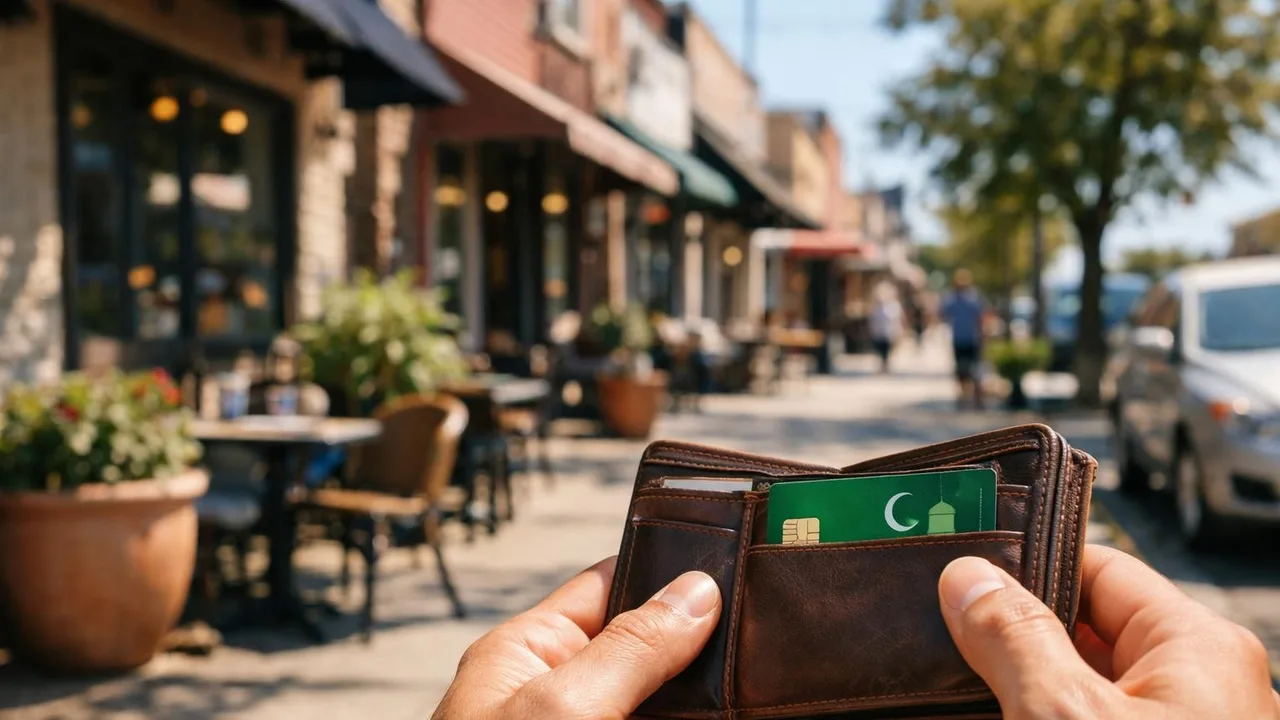
A Muslim who has just arrived in the United States can open a riba-free bank account without a Social Security number and without any US credit history, but only at a short list of institutions and only with the right documents. The FDIC's GetBanked guidance confirms that many banks accept a foreign passport, a consular ID or an Individual Taxpayer Identification Number (ITIN) in place of a US ID and SSN. The halal options are Stearns Salaam Banking, an interest-free checking account inside FDIC-insured Stearns Bank with a $50 opening minimum, UIF's Profit-Sharing Savings Account through University Bank from $100, and Bank of Whittier, a riba-free national bank. This guide covers the documents, the ITIN process, which account to open first, and how to build credit for 90 days without touching interest.
Ready to compare halal options?
What banks are actually allowed to accept from a newcomer
US banks must verify the identity of every new customer, but federal rules leave the acceptable documents to each bank's program. The FDIC's consumer page says you should bring your Social Security number or ITIN and a driver's license, state or military ID, or passport, and that some banks also accept other forms of ID. Its answer to 'Can I open an account if I'm not a US citizen?' is yes: many banks allow it, and you might need different forms of identification such as a foreign passport, a consular ID or an ITIN. The FDIC also notes that about 7 million US households have no bank account at all, which is the group these rules are designed to reach.
In practice a bank will ask for four things: a government photo ID (your passport works), a taxpayer number (SSN or ITIN, though some banks open accounts with a passport alone while the number is pending), proof of a US address (a lease, utility bill or a letter from your employer or university), and an opening deposit. Deposits at any FDIC-insured bank are protected up to $250,000 per depositor per bank, and that protection does not depend on your immigration status. The bank accounts hub ranks the halal accounts available nationally; the next sections take each one in turn.
SSN or ITIN: which one you need and how to get it
If you have work authorization you qualify for a Social Security number, and the IRS says explicitly that a nonresident alien with a US work visa does not need an ITIN because they qualify for an SSN. Apply at the Social Security Administration as soon as you arrive; the card usually comes within a few weeks. If you are a dependent spouse on a visa that does not allow work, an international student without on-campus employment, or otherwise ineligible for an SSN but you have a federal tax purpose, you apply for an ITIN. The IRS describes it as a nine-digit number for people who need a US taxpayer identification number but are not eligible for an SSN, available to resident and nonresident aliens and their spouses and dependents regardless of immigration status. It does not change immigration status or authorize work, and you cannot hold both an ITIN and an SSN.
The application is Form W-7, normally attached to a federal tax return and mailed to the IRS ITIN Operation at the Austin Service Center, or filed in person at a Taxpayer Assistance Center or through a Certifying Acceptance Agent so you do not have to mail your passport. The IRS asks you to allow 7 weeks for a decision, or 9 to 11 weeks during tax season (January 15 to April 30) or if you apply from overseas, and returns supporting documents within 60 days. Because of that timeline, newcomers who need a bank account immediately should ask whether the bank will open with a passport and a letter confirming the ITIN application is in progress. Our halal ITIN mortgage guide explains how the same number later supports home financing.
The halal accounts a newcomer can open from day one
| Account | Institution and insurance | Minimum and fees | What it is for |
|---|---|---|---|
| Salaam Personal Checking | Stearns Bank N.A., FDIC-insured, St. Cloud MN; online nationwide | $50 to open; no maintenance fee; up to 3 international wires a month fee-waived | Daily spending, direct deposit, sending money home |
| Salaam Personal Market Savings | Stearns Bank N.A. | Expected profit rate published on stearnsbank.com; funds segregated from interest deposits | Emergency fund earning profit share, not interest |
| UIF Profit-Sharing Savings | Held at University Bank, FDIC-insured; UIF as agent under AAOIFI standard 46 | $100 to open; ATM card and MyUIF app; fund by debit card up to $2,500 or ACH up to $25,000 | Savings with monthly anticipated profit |
| UIF Profit-Sharing Time Deposit | University Bank | $5,000 for 12, 36 or 60 months; $100,000 jumbo; $2,000,000 maximum | Parking a relocation lump sum for a fixed term |
| Bank of Whittier accounts | Bank of Whittier N.A., riba-free national bank, Whittier CA | Published on request; the bank's site describes itself as riba-free | Full-service banking for those who want every product interest-free |
Stearns Salaam is the natural first account. The Salaam Personal Checking page describes an interest-free account with a $50 minimum to open, no maintenance fees, and waived fees on up to three international wire transfers a month when initiated through online or mobile banking, which matters to anyone supporting family abroad. The savings account pays an expected profit derived from Stearns Bank's Islamic financing portfolio, with the funds kept separate from interest-bearing deposits, and the bank names a Sharia Supervisory Board on the page. Our Stearns Bank profile has the full assessment and compares the alternatives.
UIF's deposit accounts are the better choice for savings once your checking is set up. The deposit page says the Profit-Sharing Savings Account opens with $100, has no maximum and no term, pays a monthly anticipated profit from UIF's Shariah-compliant portfolio of home, commercial and vehicle financing, and comes with an ATM card. The relationship is an investment agency under AAOIFI standard 46: the anticipated rate is disclosed up front, is not guaranteed, and UIF may pay less if the assets underperform, which is the honest difference from a conventional savings rate. Time deposits start at $5,000 for 12, 36 or 60 months. Bank of Whittier is the third option, a national bank whose homepage describes itself as riba-free (interest-free); its account terms are not published on the pages we fetched, so request them directly. Whether each institution will open an account on an ITIN alone is not stated on their public pages, and you should ask before applying.
What to avoid in your first month
The accounts that newcomers are steered toward at the airport, the university welcome desk and the big-brand branch are mostly fine for identity and insurance but wrong for a Muslim on two counts: they pay interest on balances, and they come bundled with overdraft lines and credit card offers. Interest credited to a conventional checking or savings account is riba and must be given away, not kept; our verdict page on having a bank account sets out the rules. If you must use a conventional bank for a few weeks because a halal account is not yet open, choose a non-interest checking account, decline overdraft coverage in writing, and move the balance as soon as Stearns or UIF approves you.
- Do not accept a 'welcome bonus' that requires holding a balance in an interest-bearing account; the bonus itself is contested and the interest is not.
- Do not sign a secured credit card agreement until you have read the APR section and set up autopay in full; carrying a balance is riba whatever the card's origin.
- Do not use check-cashing stores or money-order counters as a substitute for an account; the FDIC notes depositing checks is free at a bank and paying bills is cheaper without money orders.
- Do not take the dealer financing or store card that is offered when you buy a car or furniture; our halal car dealerships guide explains why.
- Do not send remittances through services that advance funds on credit; use the fee-waived international wires from your Salaam checking account instead.
Building a credit file without paying interest
US life runs on a credit score: landlords, utilities, cell phone carriers and halal home financiers such as Guidance Residential and UIF all check it. You can build one without ever paying interest. A secured credit card, where you deposit $200 to $500 and spend against it, reports to the bureaus; pay the statement balance in full every month and no finance charge arises, so no riba is paid. Our article on whether credit cards are haram covers the fiqh and explains why the US still has no truly Islamic card. Rent-reporting services and utility reporting add further tradelines at no borrowing cost. What you must not do is carry a balance 'to build credit'; the bureaus reward on-time payment and low utilization, not interest paid, and the myth that a balance helps your score costs Muslims real money and real sin.
If you need to borrow in the first year, the riba-free routes are a qard hasan from a community fund, a 0% refinance from an institution like Jafari No-Interest Credit Union if you are eligible, or a murabaha purchase through UIF for a car in Texas, Michigan, Ohio or Illinois. The interest-free Islamic loans hub lists what exists state by state, and it is a short list; most newcomers should plan to buy their first car and furniture for cash.
Top Providers for This Topic



Free to compare · No sign-up required
A 90-day banking plan for a newly arrived Muslim family
- Week 1: apply for an SSN if you have work authorization, or gather your passport, visa and address proof and begin Form W-7 if you do not; open Salaam Personal Checking online with $50 and set up direct deposit with your employer or university.
- Week 2: move your arrival funds in by wire or ACH; keep three months of expenses in Salaam savings or UIF Profit-Sharing Savings ($100 minimum), and place any larger lump sum in a UIF time deposit only if you will not need it for 12 months.
- Week 3: open one secured credit card with a $300 to $500 deposit, set autopay to the full statement balance from your Salaam checking account, and use it for one recurring bill only.
- Week 4 to 8: enroll in a rent-reporting service through your landlord if available, put your cell phone plan in your own name, and set up fee-waived international wires for family support rather than app-based remittances.
- Week 9 to 12: if your ITIN arrives, update it with every institution; request your first credit report at AnnualCreditReport.com to confirm the tradelines are reporting; read our halal banking guide for the next stage.
- Day 90: calculate zakat on your savings if you crossed the nisab a lunar year ago in your home country, and purify any interest that a conventional account credited while you waited.
Get every halal provider graded (free PDF)
Every US halal provider graded on Shariah integrity, transparency, and value - the full scorecard PDF, plus alerts when grades change
No spam ever. Unsubscribe in one click.
Who should choose what
A worker on an H-1B, L-1 or employment-based green card with an SSN on the way should open Salaam Personal Checking in week one and treat UIF savings as the emergency fund; both are available online in every state. A dependent spouse or F-1 student without work authorization should start the ITIN process immediately, open whichever halal account accepts a passport while it is pending, and ask Stearns and UIF directly about ITIN-only onboarding, because neither says on its public pages whether it is possible. A family relocating with a large sum should split it: operating money in Salaam checking, a year of expenses in Salaam or UIF savings, and the remainder in a UIF time deposit or, if they want market exposure, a halal robo-advisor account such as Wahed once a taxpayer number is in hand.
Anyone offered a conventional account with 'free' interest should decline the interest, not the account, if there is no alternative for a few weeks, and keep a record of every cent credited for purification. Riba-free banking in America is narrow but real, and a newcomer who sets it up in the first 90 days will not have to unwind a conventional setup later. Facts checked against fdic.gov, irs.gov, stearnsbank.com, myuif.com, bankofwhittier.com on September 29, 2026.
Frequently asked questions
Can I open a halal bank account in the US without an SSN?
Often, yes. The FDIC says many banks accept a foreign passport, consular ID or ITIN from non-citizens. Stearns Salaam Banking and UIF do not state on their public pages whether they open accounts on an ITIN or passport alone, so ask before applying. If you have work authorization, apply for an SSN first; it removes the question entirely.
How long does an ITIN take?
The IRS asks you to allow 7 weeks for notification of your ITIN application status, or 9 to 11 weeks if you apply during tax season (January 15 to April 30) or from overseas. You apply on Form W-7, usually attached to a tax return, by mail to the Austin Service Center, in person at a Taxpayer Assistance Center, or through a Certifying Acceptance Agent.
Is Stearns Salaam Banking open to people in every state?
Stearns Bank is a nationally chartered, FDIC-insured bank headquartered in St. Cloud, Minnesota, and its Salaam personal accounts are applied for online. The Salaam Personal Checking account opens with $50, has no maintenance fees, and waives fees on up to three international wires a month. State-by-state availability is not restricted on the page we fetched.
Is the profit on a UIF savings account halal?
UIF structures its Profit-Sharing Deposit Accounts as an investment agency under AAOIFI standard 46, with funds segregated from interest-bearing assets and profit derived from UIF's Shariah-compliant home, commercial and vehicle financing portfolio. The anticipated rate is disclosed in advance but not guaranteed, and the accounts are approved and audited by UIF's Sharia Supervisory Board. Deposits are held at University Bank, Member FDIC.
Do I have to purify interest credited while I waited for a halal account?
Yes. Interest credited to a conventional checking or savings account is riba and should not be kept; give the exact amount to charity without intending reward for yourself. Keep the statements, total the interest lines, and donate that figure. Choosing a non-interest checking option at the conventional bank in the meantime avoids the problem altogether.
Compare providers in your state
See side-by-side comparisons of Shariah-compliant products, or let our matcher recommend the best options for your situation.
Will using a secured credit card and paying in full count as riba?
No interest is paid if you pay the full statement balance every month, so no riba changes hands, and the card still reports to the credit bureaus. Most scholars permit holding a card on that basis. The agreement itself contains an interest clause, which some scholars object to; avoid the issue by setting autopay for the full balance from day one.